Judge Information
Information for prospective judges can be found here. Returning Judges or those ready to register, click below to proceed to registration.
General Information and FAQ
What is Odyssey of the Mind?
Odyssey of the Mind is a program where teams of students work together to solve original, fun problems, using their creativity, with the solutions presented in the form of an 8-minute performance.
What are the problems like?
There are a variety of Long Term Problems and there are Spontaneous Problems. Teams take weeks or months solving Long Term problems. Spontaneous problems are given to the teams at the tournament.
What is a Long Term Problem?
Who are the judges?
What Happens at Judge Training?
There are two parts to Judge Training:
A. General Training
Learn about the program and the concept of creative problem-solving, and the judge types. Judges take the first part of training by watching a video or on-site.
B. Problem/Group-Specific Training
Break out in different teams and learn about a specific problem in order to become competition judges.
Check the calendar for location and dates of Judge Training in your Region. Specific Judge Training is required every year for all Judge positions, even for returning Judges. Judge training is only provided before Regionals. All judges must be trained and serve at Regionals before they can particiapte at the State level.
Judge Assignments
Most judges spend the competition day in the same room, judging multiple teams perform very different solutions to their problem. Sometimes, judges are assigned an alternate location for the afternoon. These assignments are made during judge training.
After Judge Training, Judges are given a specific position (role) so that they focus on one specific part of the presentation. This makes it easier to understand and score a small element. No one judge scores or ranks the entire solution. Each scoring judge is paired with 1-2 other judges for the same elements and their scores are averaged.
Judging Positions
Staging Area Judge
Timekeeper / Announcer
Problem & Style Judges
Know what to score. Congratulate the team after their performance.
Scorechecker
Make sure the scores are in range and are compiled correctly. Must have own laptop for data entry.
Head Judge
Manage the judging team. Meet with the coach and give the raw scores.
Travel and Reimbursements
Meals
Meals are provided for Judges and Officials; Please read competition information provided about your local competition for more information.
Travel Reimbursement
Judges are reimbursed for hotels if they travel over 150 Mi one-way. Effective 2026, judges are no longer reimbursed for travel costs.
Hotel Accommodation is arranged and/or reimbursed for team judges and Officials traveling to the State tournament from out of region, based on double occupancy. Details are updated every year on the Judge Travel page closer to the time.
Texas Judges do not normally travel to World Finals. A special contingent represents the TX team at World Finals. Returning Judges who are interested in experiencing World Finals should contact their Problem Captain or the Regional Director in January.
After Judges Training, Judges first volunteer at the Regional Tournament. If the team they represent advances to the TX State tournament, then judges are asked to also volunteer at that that tournament.
In the Region that will be hosting the State tournament, ALL regional judges are required to participate in the TX State tournament as well.
Judges cannot be “job-share” volunteers. We need judges who have experience in the current problems for the second level. Therefore, only trained and experienced judges from Regionals are accepted at the State level.
What happens at competition
Judges gather under the direction of their Problem Captain (“PC”) and review several teams in one division, following a specific schedule. Judges remain all day in one specific area that they were trained for (Specific problem, Spontaneous, Scoring, etc.). Judges cannot break to watch their team perform.
When does Registration start?
Judge Registration for Regional tournaments usually opens in November for the following spring. Check our home page for announcements when your Region’s registration is open.
Many judges from regional tournaments are required to attend the State tournament as well. Requirements vary by region. Please do NOT advance your judge registration for the State tournament until AFTER Regionals.
Judge Types
There are two types of judges:
a) Team Judges
Team Judges are the volunteers who represent an Odyssey team. Every Odyssey team must supply a trained judge to be qualified for the tournaments. Different regions have different requirements. Coaches, be sure that you understand your team’s judge requirements, which can be found in your specific region’s Team Qualifications or your Team Confirmation Email.
b) Community Judges
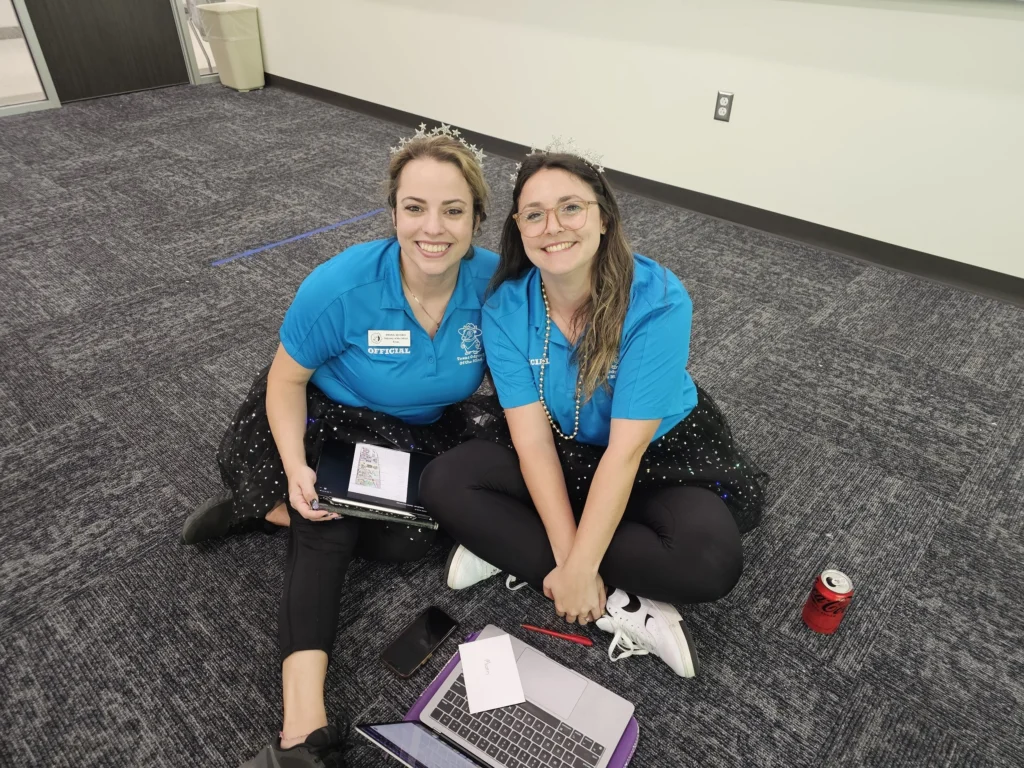
Community judges are volunteers from the community that judge without representing a specific team. These are often educators, professionals, military personnel, etc. Volunteer Service certificates are available. If you are interested, we would love to have you as a Community Judge.
Training Options
Both General and Problem-Specific training are important components of the judge qualifications. Please read carefully the expectations for all judges.
General Training is now available in-person and online and can be taken any time from a computer or tablet. You must first register for a regional tournament, and you will receive the links for online training that you must take before your Group specific training session.
Problem-Specific training is sometimes offered on-site before the tournament or it is offered via video-conferencing. It varies by Region.
Once you register, you will receive more specific information from our Regional Judge Coordinator.
General Training Options
On-Site
The Houston Area region will incorporate the General Training within the full training session on-site. No advance training is necessary, unless you plan to attend the virtual make-up session (see next section below).
Judges General Training
This is a 25 minute presentation that explains the program, the problems and the role of the judges.
WHO? Required for new judges. Returning judges are exempt but they must still register as needed for problem distribution.General Training Certification Test
There will be a walk-through of the general certification test which consists of likely scenarios that you may encounter as judges. Answers are provided at the end. You will get a printed copy of the test questions and answers. We recommend you re-take it 2 days before each competition as a refresher.
WHO? Required for new and returning judges. Be careful to select the link that pertain to your region so that the Directors can track attendance properly.GT Presentation
This is an additional 10 minute live presentation explaining the cross-over between the Gifted and Talented program and Odyssey of the Mind.
WHO? Required for educators who wish to get a certificate for 6 hours GT credit.
Online
We offer three components online to registered judges. These apply to all Texas Regions as well as the TX State tournament. You must complete all required online training at least 3 days before your on-site Judges’ Training:
Judges General Training
This is a 25 minute webcast that explains the program, the problems and the role of the judges.
WHO? Required for new judges. Returning judges are exempt.General Training Certification Test
This is an on-line test with 20 sample scenarios. Answers are provided at the end. You may re-take the test multiple times. We recommend you re-take it 2 days before each competition as a refresher.
WHO? Required for new and returning judges. Be careful to select the link that pertain to your region so that the Directors can track attendance properly.GT Presentation
This is an additional 10 minute webcast explaining the cross-over between the Gifted and Talented program and Odyssey of the Mind.
WHO? Required for educators who wish to get a certificate for 6 hours GT credit.
Onsite Training Options By Region
HARO
offers the main training on-site for General and Problem-Specific training. There will also be a make-up session via video conference, with limited scope (not all problems will be available in the make-up session).
North Texas
offers on-site General and Problem-Specific training on the evening before the competition.
Central Texas
offers Problem-Specific training on-site the morning of the regional competition.
Problem-Specific Training
Each Region offers Problem-Specific training (either on-site or via video-conference) conducted by the Problem Captains before the regional tournaments. ALL judges must register for tournament and attend the problem/group specific Judges’ Training, even returning judges.
Typically judges are assigned to a judging group (a specific problem, score room, spontaneous, etc.) and then they split up for specific training. This is sometimes done on the spot for on-site training, or ahead of time.
After judges are trained, they cannot be replaced, or change groups and, if attending the State tournament, must judge in the same problem/group as regionals.
Check our site calendar for specific Judge Training events in your region. Judge training is only provided before Regionals. All judges must be trained and serve at Regionals, before they can particiapte at the State level.
More Questions?
If you have any questions or need more information, contact the Judge coordinator or Regional Director for your region. “HARO” stands for Houston Area Region Odyssey.
If you do not know what region you belong to, please email statejudge@txodyssey.org.